Hyperborea to the Chinese

“It is through this wonderfully pure seer Liezi, as it appears to me, that we ascend to the primitive revelation of truth given to these ancient people.” - William Henry Channing
In the 5th century BC an ancient Chinese philosopher named Lie Yukou wrote what is known as ‘Liezi,’ a fundamental Taoist text that contains ancient Chinese history as well as philosophy. Modern experts believe that many of the stories contained in ‘Liezi’ were not actually originally written by Lie Yukou himself, but rather by much older Chinese authors, and that Lie Yukou took it upon himself to compile and edit these writings for the sake of preservation and posterity.
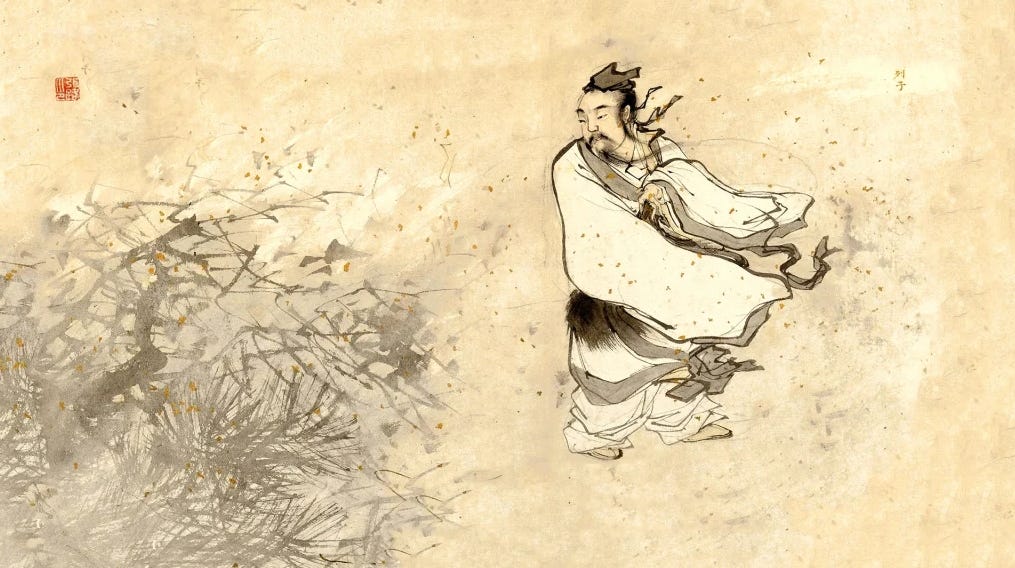
Nevertheless, it is in ‘Liezi’ that we find the story of Yu the Great, who is known for creating the Xia Dynasty in 2,070 BC. It is written that while Yu the Great was in north-central China combatting flooding that was taking place, he got lost, stumbling into a foreign land:
“Later on, when Yu was helping to fight the Great Flood, he lost his way and stumbled into a country far up north. When he asked the inhabitants where he was, they told him he was in the North Country, thousands of miles from his home.”
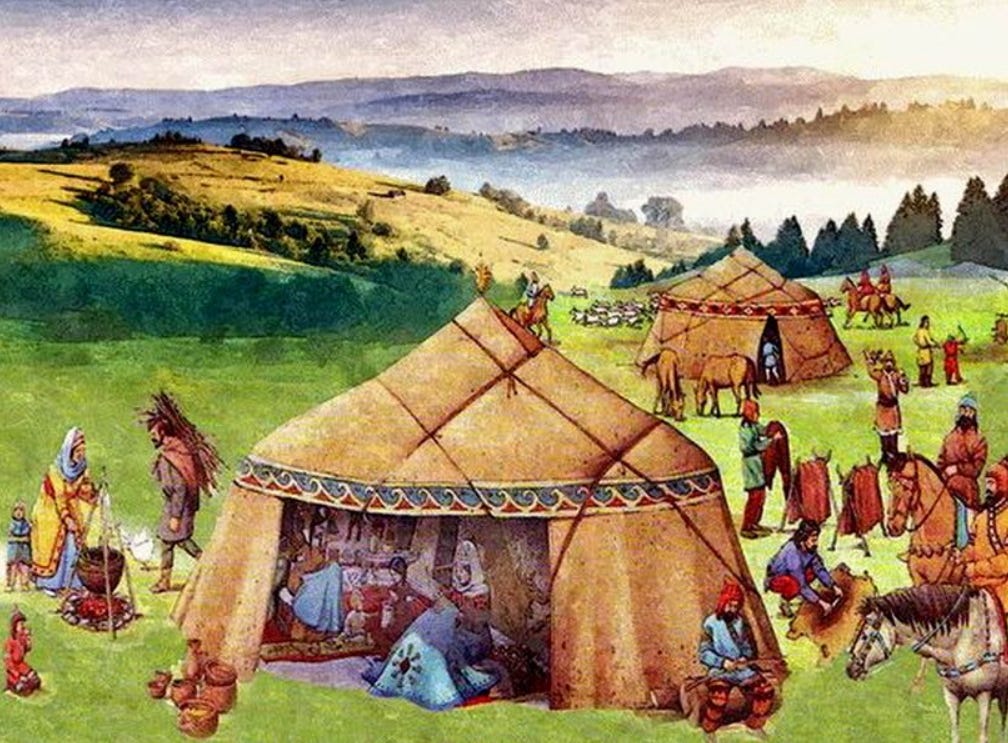
Yu the Great described this northern land and its people with a high degree of detail, speaking of the geography and the physical characteristics of those that lived there:
“They lived on a great plain with miles of grassland… The people were gentle and friendly. Their bodies were soft, their hearts were open, and their minds were clear. Everybody lived together in harmony. There were no quarrels, no jealousies, and no pride. The old lived with the young … The people died naturally after living out a hundred years. No one died of illness or disease, and no one was killed accidentally. The people lived in happiness and contentment and did not know anxiety, sorrow, decay, death, or pain. The people there also loved music and song. They danced and sang all day.”
‘Liezi’ goes on to mention that when King Mu of the Zhou Dynasty visited this very same north land over 1,000 years later, he enjoyed it so much that he remained there for 3 years. Upon his return home, he reminisced so intently and fondly on these northern lands that he could neither eat nor sleep. King Mu’s top advisor, Kuan-Chung, was so fascinated by his king’s detailing of the north land that he encouraged King Mu to return, alongside him, so that he could see this land for himself. However, much to the dismay of Kuan-Chung, as they were set to embark on their journey north, one of King Mu’s ministers convinced him to remain in China; never to return to the north lands ever again.
In the case of the ancient Chinese, we are left with what are ultimately a series of outside observations made of the people of the north. Of great value, we are also given an approximate timeframe, as Yu the Great is said to have traveled to the north lands in 2,070 BC while King Mu is said to have traveled to the northlands during his reign as king, sometime between 976 BC and 922 BC.